
Key Takeaways
- Rotator cuff tears are a common cause of shoulder pain, especially in adults over 40, and can significantly affect daily activities such as lifting, reaching, or sleeping comfortably.
- Symptoms often include shoulder pain, weakness, and limited mobility, particularly during overhead movements or when lying on the affected shoulder.
- Many cases improve with non-surgical care, including physiotherapy, structured rotator cuff tear therapy, and guided rotator cuff tear exercises.
- Early diagnosis is important, as untreated injuries such as a partial rotator cuff tear can worsen over time and eventually require rotator cuff tear surgery.
- Advanced procedures like arthroscopic rotator cuff tear repair can effectively restore shoulder strength and function when conservative rotator cuff tear treatment is unsuccessful.
What Is a Rotator Cuff Tear?
A rotator cuff tear occurs when one or more of the tendons that stabilise the shoulder joint become damaged or torn. The tear may be partial or complete and can result from injury, repetitive strain, or age-related degeneration. Symptoms commonly include pain, weakness, and limited shoulder movement.
The rotator cuff consists of four muscles and tendons that connect the upper arm bone (humerus) to the shoulder blade. These tendons stabilise the shoulder and allow movement such as lifting, rotating, and reaching overhead.
When these tendons weaken or tear, shoulder mechanics become disrupted. Doctors classify tears into different types:
- Partial tears: A partial rotator cuff tear occurs when the tendon is damaged but not fully separated.
- Full-thickness tears: The tendon completely detaches from the bone.
- Degenerative tears: Develop gradually with age.
- Traumatic tears: Result from accidents or sudden heavy lifting.
How Common Are Rotator Cuff Tears?
Rotator cuff tears are very common, particularly among adults over the age of 40. Studies show that the risk increases significantly with age due to tendon degeneration and reduced blood supply. Many people may have small tears without symptoms until the injury worsens.
Research from the American Academy of Orthopaedic Surgeons indicates that rotator cuff disorders are among the most frequent causes of shoulder pain in adults.
Some estimates suggest that:
- Nearly 25% of adults over 60 have some form of rotator cuff tear
- Many tears remain undiagnosed until pain or weakness develops
- Athletes and manual labourers are at higher risk due to repetitive shoulder movements
Because early tears may cause minimal symptoms, many patients delay seeking medical care.
What Are the Symptoms of a Rotator Cuff Tear?
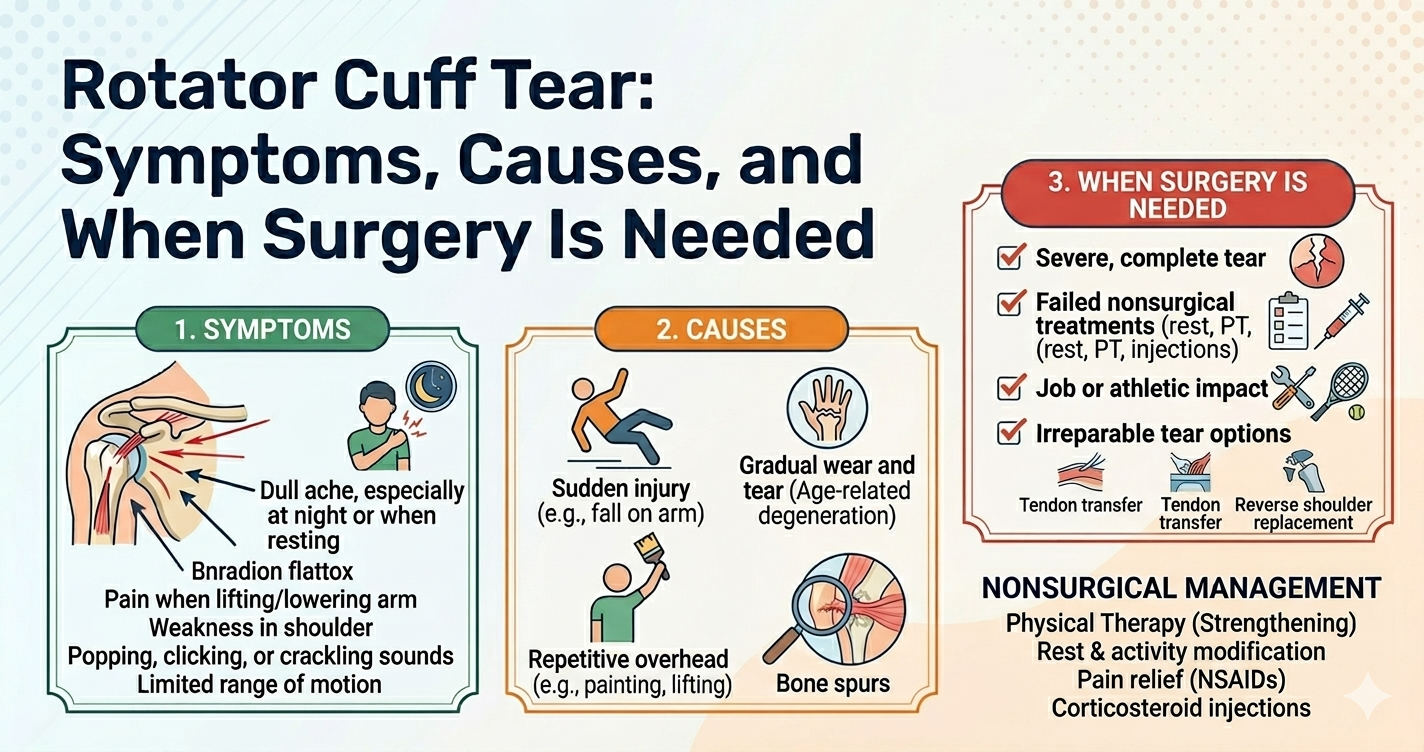
Typical symptoms include persistent shoulder pain, weakness when lifting the arm, difficulty performing overhead activities, and discomfort during sleep. Pain may worsen at night or when lying on the affected shoulder. Some individuals also experience a clicking or catching sensation during shoulder movement.
Symptoms often begin gradually, especially in degenerative tears.
Common signs include:
- Pain when lifting or lowering the arm
- Difficulty reaching behind the back
- Weakness when carrying objects
- Shoulder stiffness
- Reduced range of motion
Patients with a partial rotator cuff tear may initially experience mild discomfort that worsens with activity.
If left untreated, the tear may enlarge and cause significant functional limitations.
What Causes Rotator Cuff Tears?
Rotator cuff tears are commonly caused by ageing, repetitive shoulder movements, trauma, or structural changes within the shoulder joint. Activities that involve frequent overhead arm use can strain the tendons over time and lead to tears.
Several factors contribute to tendon damage.
Degenerative wear and tear
With age, the rotator cuff tendons gradually weaken and become more prone to tearing.
Repetitive shoulder strain
Athletes and workers performing repetitive overhead motions are at increased risk.
Examples include:
- Cricket players
- Tennis players
- Painters
- Construction workers
Sudden injuries
A fall, accident, or lifting heavy weights can cause acute tendon tears.
Bone spurs
Bone growths can rub against tendons, leading to gradual damage.
Who Is at Higher Risk of Rotator Cuff Tears?
Certain individuals have a higher risk of developing rotator cuff injuries due to lifestyle, occupation, or age-related changes. People who perform repetitive shoulder movements or heavy lifting are particularly vulnerable.
Common risk factors include:
- Age above 40–50 years
- Repetitive overhead sports
- Physically demanding occupations
- Poor shoulder posture
- Smoking (affects tendon healing)
- Weak shoulder muscles
Athletes involved in throwing sports and swimmers often develop overuse injuries that eventually lead to tears.
Preventive strengthening programs and early rotator cuff tear therapy can significantly reduce risk.
How Is a Rotator Cuff Tear Diagnosed?
Diagnosis involves a combination of physical examination, strength tests, and imaging studies such as ultrasound or MRI scans. These tests help determine whether the tear is partial or complete and guide the most appropriate rotator cuff tear treatment plan.
During clinical evaluation, the orthopaedic specialist assesses:
- Shoulder strength
- Range of motion
- Pain patterns
- Functional limitations
Imaging tests help confirm the diagnosis:
X-rays – rule out bone abnormalities
Ultrasound – visualise tendon damage
MRI scan – evaluate tear size and severity
Accurate diagnosis is essential to decide whether conservative care or rotator cuff tear surgery is necessary.
What Are the Non-Surgical Treatment Options?
Many rotator cuff tears can be treated without surgery using rest, physiotherapy, medications, and structured rehabilitation programs. Conservative management aims to reduce pain, strengthen surrounding muscles, and restore shoulder mobility.
Common approaches include:
Physiotherapy
Structured rotator cuff tear therapy helps strengthen shoulder stabilising muscles and improve joint function.
Medications
Anti-inflammatory medications may relieve pain and swelling.
Activity modification
Avoiding overhead activities reduces tendon strain and allows healing.
Rehabilitation programs
Specialised rotator cuff tear exercises improve flexibility, stability, and muscle balance.
For patients with a partial rotator cuff tear, these treatments are often very effective and may prevent the need for surgery.
What Are the Best Rotator Cuff Tear Exercises?
Therapeutic exercises strengthen the shoulder muscles, improve joint stability, and support tendon healing. These exercises are an important component of rotator cuff tear therapy and help patients regain shoulder strength safely.
Common rotator cuff tear exercises include:
- Pendulum swings
- Shoulder external rotation exercises
- Resistance band strengthening
- Scapular stabilisation exercises
- Gentle stretching routines
These exercises must be performed under professional guidance to prevent further injury.
A structured rehabilitation program gradually increases strength while protecting the healing tendon.
When Is Rotator Cuff Tear Surgery Needed?
Rotator cuff tear surgery is recommended when symptoms persist despite conservative treatment, when the tear is large, or when shoulder weakness significantly affects daily activities. Surgery is also advised after traumatic injuries in active individuals.
Doctors may recommend surgery when:
- Pain persists beyond 3–6 months
- Shoulder weakness worsens
- Imaging shows a large tear
- Daily activities become difficult
- Conservative treatment fails
Timely surgical intervention may prevent tendon retraction and long-term joint damage.
What Happens During Rotator Cuff Tear Repair Surgery?
During rotator cuff tear repair, the surgeon reattaches the torn tendon to the upper arm bone using specialised anchors and sutures. The procedure is usually performed arthroscopically through small incisions.
Types of surgical techniques include:
Arthroscopic repair
Minimally invasive procedure using a camera and specialised instruments.
Mini-open repair
Combines arthroscopy with a small incision.
Open repair
Used for complex or very large tears.
Advances in orthopaedic technology have significantly improved outcomes of rotator cuff tear surgery.
What Is the Recovery Process After Rotator Cuff Tear Surgery?
Recovery typically takes several months and involves gradual rehabilitation to restore shoulder strength and flexibility. Structured physiotherapy plays a crucial role in achieving optimal recovery after rotator cuff tear repair.
Typical recovery timeline:
First 4–6 weeks
- Arm supported in a sling
- Passive shoulder movements
6–12 weeks
- Begin supervised physiotherapy
3–6 months
- Strengthening exercises and mobility training
Guided rotator cuff tear therapy and progressive rotator cuff tear exercises help patients safely regain shoulder function.
Can Rotator Cuff Tears Be Prevented?
Although not all rotator cuff tears can be prevented, strengthening shoulder muscles, maintaining proper posture, and avoiding repetitive strain can reduce the risk significantly. Early treatment of shoulder pain also helps prevent minor injuries from worsening.
Preventive measures include:
- Regular shoulder strengthening
- Proper warm-up before exercise
- Ergonomic work habits
- Avoiding sudden heavy lifting
- Maintaining flexibility and posture
Early diagnosis and appropriate rotator cuff tear treatment reduce the likelihood of needing rotator cuff tear repair.
When Should You See an Orthopaedic Specialist?
You should consult an orthopaedic specialist if shoulder pain persists for more than two weeks, interferes with sleep, limits arm movement, or causes weakness. Early medical evaluation allows timely treatment and prevents the progression of the tear.
Ignoring symptoms may allow a small partial rotator cuff tear to develop into a larger injury requiring rotator cuff tear surgery.
Early diagnosis ensures patients receive the most effective rotator cuff tear treatment, whether through rehabilitation, physiotherapy, or surgical repair.
Early Treatment Can Prevent Long-Term Shoulder Damage
A rotator cuff tear is one of the most common causes of chronic shoulder pain, but effective treatment options are available. From physiotherapy and rotator cuff tear exercises to advanced rotator cuff tear repair, modern orthopaedic care offers personalised solutions for restoring shoulder function.
Frequently Asked Questions (FAQs)
1. Can a rotator cuff tear heal without surgery?
Yes, many rotator cuff tears can heal or improve without surgery, especially a partial rotator cuff tear. Conservative rotator cuff tear treatment, such as physiotherapy, rest, medications, and structured rotator cuff tear therapy, can significantly reduce pain and improve shoulder function in many patients.
2. What are the best exercises for a rotator cuff tear?
The most effective rotator cuff tear exercises focus on strengthening shoulder stabilising muscles and improving flexibility. Common exercises include pendulum swings, resistance band rotations, scapular stabilisation exercises, and gentle stretching.
3. How long does recovery take after rotator cuff tear surgery?
Recovery after rotator cuff tear surgery typically takes about 4–6 months, depending on the severity of the tear and the patient’s overall health. Rehabilitation includes gradual physiotherapy, strengthening programs, and structured rotator cuff tear therapy to restore shoulder mobility and strength.
4. What happens if a rotator cuff tear is left untreated?
If left untreated, a rotator cuff tear can worsen over time, leading to increased pain, reduced shoulder strength, and limited arm movement. A small partial rotator cuff tear may progress into a complete tear that may eventually require rotator cuff tear repair or surgical intervention.
5. Is rotator cuff tear surgery safe?
Yes, modern rotator cuff tear surgery is generally safe and often performed using minimally invasive arthroscopic techniques. These procedures allow surgeons to perform rotator cuff tear repair with smaller incisions, reduced complications, and faster recovery compared to traditional open surgery.
6. Who is most at risk of developing a rotator cuff tear?
People over the age of 40, athletes involved in overhead sports, and individuals with physically demanding jobs are at higher risk. Repetitive shoulder strain, poor posture, and tendon degeneration increase the likelihood of needing rotator cuff tear treatment over time.
7. When should I see a doctor for shoulder pain?
You should consult a specialist if shoulder pain lasts longer than two weeks, worsens at night, causes weakness, or limits arm movement. Early evaluation allows doctors to recommend appropriate rotator cuff tear therapy, rehabilitation programs, or rotator cuff tear surgery if necessary.