
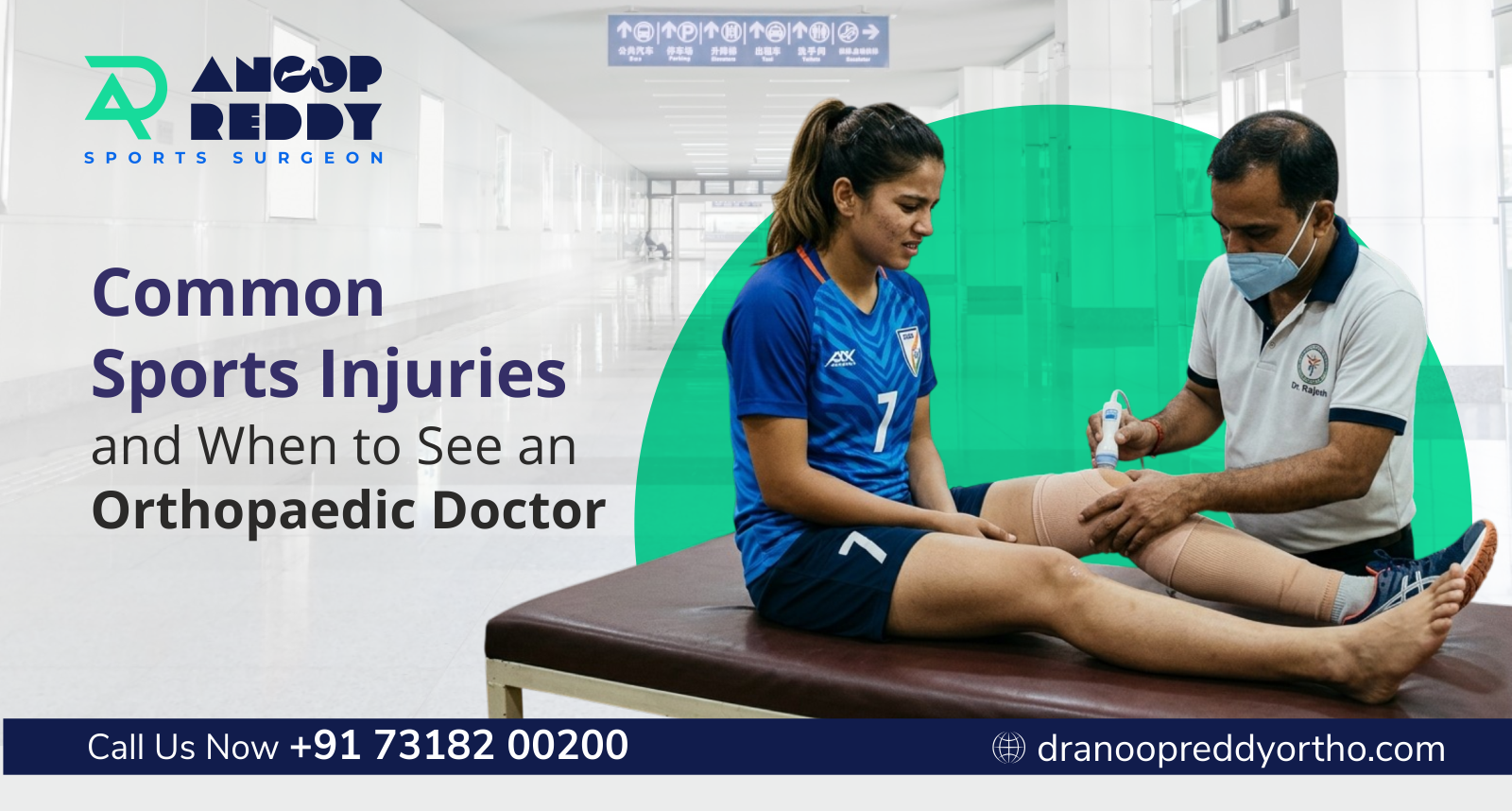
Sports injuries can affect muscles, ligaments, tendons, bones, and joints during exercise or recreational activities. While many minor injuries improve with rest and appropriate care, persistent pain, swelling, instability, reduced movement, or an inability to bear weight may indicate a more serious problem. Early evaluation by an orthopaedic specialist can help ensure an accurate diagnosis, appropriate treatment, and a safer return to sports.
Key Takeaways
- Sports injuries can affect people of all ages—not just professional athletes.
- Sprains, strains, ligament injuries, tendon injuries, fractures, and dislocations are among the most common sports injuries.
- Early diagnosis often shortens recovery time and reduces the risk of long-term complications.
- Ignoring persistent pain may lead to chronic joint damage.
- Rehabilitation is as important as the initial treatment.
Sports Injuries at a Glance
- Who Is Affected: Professional athletes, recreational players, gym-goers, runners, children, and older adults
- Common Injuries: Sprains, strains, ACL tears, meniscus injuries, rotator cuff injuries, tennis elbow, ankle sprains, stress fractures
- Symptoms: Pain, swelling, bruising, stiffness, reduced movement, instability
- Diagnosis: Clinical examination, X-ray, ultrasound, MRI, CT scan (when required)
- Treatment: Rest, physiotherapy, medications, braces, injections, or surgery depending on the injury
Latest Statistics
- Sports and exercise-related injuries are among the most common musculoskeletal problems seen in orthopaedic practice.
- Knee, ankle, shoulder, and elbow injuries account for a large proportion of sports-related injuries.
- Recreational athletes experience sports injuries almost as frequently as competitive athletes, particularly when training without proper conditioning or technique.
- Early rehabilitation significantly improves recovery and reduces the risk of repeat injuries.
Introduction
Whether you’re playing cricket on weekends, running a marathon, lifting weights at the gym, or enjoying a game of badminton, staying physically active offers tremendous health benefits. However, every sport also carries a risk of injury.
Many people assume sports injuries happen only to professional athletes. In reality, they are just as common among recreational players, fitness enthusiasts, school children, and even individuals beginning a new exercise programme.
While some injuries heal with rest and simple home care, others require prompt medical attention. Continuing to play through pain or delaying treatment can worsen the injury, prolong recovery, and increase the risk of long-term joint damage.
Understanding the most common sports injuries—and recognising when to consult an orthopaedic specialist—can help you recover safely and return to the activities you enjoy
What Is a Sports Injury?
A sports injury is any injury that occurs during physical activity, exercise, or sports participation.
These injuries may involve:
- Bones
- Muscles
- Tendons
- Ligaments
- Cartilage
- Joints
Some injuries happen suddenly after a fall, twist, or collision, while others develop gradually due to repetitive movements or overuse.
Acute vs Overuse Injuries
Sports injuries are broadly divided into two categories.
Acute Injuries
Acute injuries occur suddenly.
Examples include:
- Ankle sprain
- Ligament tear
- Shoulder dislocation
- Fracture
- Muscle tear
These injuries are usually associated with a specific event, such as twisting the knee or landing awkwardly.
Overuse Injuries
Overuse injuries develop gradually because of repeated stress on muscles, tendons, or joints.
Common examples include:
- Tennis elbow
- Golfer’s elbow
- Runner’s knee
- Achilles tendinopathy
- Stress fractures
These injuries often begin with mild discomfort that worsens over time if activity continues.
Common Sports Injuries
1. Ankle Sprain
An ankle sprain occurs when the ligaments supporting the ankle are stretched or torn, usually after the foot twists inward unexpectedly.
Symptoms
- Sudden pain
- Swelling
- Bruising
- Difficulty walking
- Tenderness around the ankle
Mild sprains often improve with conservative treatment, but severe sprains may require immobilisation or rehabilitation.
2. ACL Injury
The anterior cruciate ligament (ACL) is one of the major stabilising ligaments of the knee.
ACL injuries commonly occur during:
- Football
- Basketball
- Badminton
- Kabaddi
- Skiing
Symptoms
- A popping sensation
- Immediate swelling
- Knee instability
- Difficulty bearing weight
Complete ACL tears usually require specialist assessment and, in active individuals, may require surgical reconstruction.
3. Meniscus Tear
The meniscus acts as a shock absorber inside the knee.
It may tear after twisting movements, especially while the foot remains planted.
Symptoms
- Knee pain
- Swelling
- Locking of the knee
- Difficulty squatting
- Clicking sensations
Treatment depends on the location, size, and type of tear.
4. Rotator Cuff Injury
The rotator cuff consists of muscles and tendons that stabilise the shoulder.
These injuries are common in:
- Swimmers
- Tennis players
- Cricket bowlers
- Volleyball players
- Weightlifters
Symptoms
- Shoulder pain
- Weakness
- Difficulty lifting the arm
- Pain during overhead movements
- Night pain while sleeping
Early treatment often prevents progression to larger tendon tears.
5. Tennis Elbow
Despite its name, tennis elbow affects many people who have never played tennis.
It develops because of repetitive strain affecting the tendons on the outside of the elbow.
Symptoms
- Pain while gripping objects
- Difficulty lifting items
- Pain when shaking hands
- Tenderness over the outer elbow
6. Muscle Strain
Muscle strains commonly affect:
- Hamstrings
- Calf muscles
- Quadriceps
- Groin muscles
These injuries occur when muscle fibres are overstretched or torn.
Symptoms
- Sudden pain
- Muscle tightness
- Swelling
- Bruising
- Weakness
Minor strains often heal with appropriate rehabilitation, while severe tears may require further treatment.
7. Stress Fracture
Stress fractures are tiny cracks within the bone caused by repetitive impact.
They commonly affect runners, dancers, military personnel, and athletes who suddenly increase training intensity.
Symptoms
- Pain that worsens with activity
- Localised tenderness
- Mild swelling
- Pain that improves with rest initially
Ignoring stress fractures may result in complete fractures.
Expert Insight
Many sports injuries begin as mild discomfort rather than severe pain. Continuing to train despite persistent symptoms can transform a small injury into a more serious problem. Early assessment allows the correct diagnosis, appropriate rehabilitation, and a safer return to sport while reducing the risk of long-term joint damage.
How Are Sports Injuries Diagnosed?
An accurate diagnosis is the first step toward effective treatment and a safe return to physical activity. An orthopaedic doctor will evaluate your symptoms, examine the injured area, and recommend imaging tests if needed.
Physical Examination
Your doctor may assess:
- Pain location and severity
- Swelling and bruising
- Joint stability
- Range of motion
- Muscle strength
- Walking pattern (gait)
- Functional movement
A detailed history of how the injury occurred often provides valuable clues about the underlying problem.
Imaging Tests
Depending on the suspected injury, your doctor may recommend one or more of the following:
X-ray
Useful for detecting:
- Bone fractures
- Joint dislocations
- Bone alignment abnormalities
X-rays do not clearly show ligaments, tendons, or cartilage.
Ultrasound
Ultrasound can help evaluate:
- Tendon injuries
- Muscle tears
- Ligament injuries
- Fluid collections around joints
It is commonly used because it is quick, non-invasive, and does not involve radiation.
MRI Scan
MRI is considered the gold standard for evaluating many sports injuries involving soft tissues.
It provides detailed images of:
- ACL and PCL tears
- Meniscus injuries
- Rotator cuff tears
- Cartilage damage
- Tendons
- Muscles
- Ligaments
CT Scan
CT scans are generally reserved for complex fractures or injuries requiring detailed assessment of bone structures.
Treatment for Sports Injuries
Treatment depends on the type, severity, and location of the injury, as well as the patient’s age, activity level, and recovery goals.
Immediate Care: PEACE & LOVE
The traditional RICE (Rest, Ice, Compression, Elevation) approach is still useful in some situations, but many sports medicine professionals now recommend the PEACE & LOVE principles for soft tissue injuries.
PEACE (Immediately After Injury)
- P – Protect the injured area from further harm.
- E – Elevate the limb to help reduce swelling.
- A – Avoid anti-inflammatory medications unnecessarily during the very early healing phase unless advised by your doctor.
- C – Compress with an elastic bandage if appropriate.
- E – Educate yourself about proper recovery and avoid unnecessary treatments.
LOVE (During Recovery)
- L – Load the injured area gradually as tolerated.
- O – Optimism supports recovery by encouraging active rehabilitation.
- V – Vascularisation through gentle aerobic exercise promotes healing.
- E – Exercise to restore strength, flexibility, balance, and function.
Your healthcare professional or physiotherapist can guide you on applying these principles safely.
Medications
Depending on the injury, treatment may include:
- Pain-relieving medicines
- Anti-inflammatory medications (when appropriate)
- Muscle relaxants in selected cases
Medication should always be used under medical supervision.
Physiotherapy
Physiotherapy is often one of the most important parts of recovery.
A structured rehabilitation programme helps:
- Reduce pain
- Restore flexibility
- Improve muscle strength
- Improve balance and coordination
- Regain joint stability
- Reduce the risk of re-injury
Returning to sport too early without rehabilitation significantly increases the chance of repeat injuries.
Braces and Supports
Your doctor may recommend:
- Knee braces
- Ankle supports
- Shoulder slings
- Wrist splints
These devices help protect the injured area during healing but should be used as advised to avoid unnecessary stiffness or muscle weakness.
Injections
Some patients may benefit from injections, depending on the diagnosis.
Options may include:
- Corticosteroid injections for selected inflammatory conditions
- Platelet-rich plasma (PRP) therapy in carefully chosen cases
The decision depends on the type of injury, current evidence, and individual patient factors.
Surgery
Surgery is considered when conservative treatment is unlikely to restore function or when significant structural damage is present.
Common sports-related procedures include:
- ACL reconstruction
- Meniscus repair
- Rotator cuff repair
- Shoulder stabilisation surgery
- Achilles tendon repair
- Fracture fixation
Modern minimally invasive (arthroscopic) techniques often allow smaller incisions, reduced pain, and faster rehabilitation for appropriate patients.
When Should You See an Orthopaedic Doctor?
Seek medical attention if you experience:
- Severe or persistent pain
- Significant swelling
- Inability to bear weight
- Joint instability or giving way
- Visible deformity
- Limited movement that does not improve
- Numbness or tingling
- A popping sensation followed by swelling
- Symptoms lasting more than a few days despite rest
- Recurrent injuries affecting the same joint
Early evaluation helps prevent minor injuries from becoming long-term problems.
How Can Sports Injuries Be Prevented?
Many sports injuries are preventable with proper preparation and training.
Prevention Tips
- Warm up before exercise.
- Cool down after activity.
- Stretch regularly to maintain flexibility.
- Strengthen muscles around major joints.
- Increase training intensity gradually.
- Wear appropriate footwear and protective equipment.
- Stay hydrated.
- Practise correct technique.
- Allow adequate recovery between training sessions.
- Stop exercising if you experience persistent pain.
Listening to your body is one of the best ways to reduce injury risk.
Myth vs Fact
Myth: Playing through pain makes you stronger.
Fact: Persistent pain is often a warning sign of injury. Ignoring it may lead to more severe damage and longer recovery.
Myth: Only professional athletes suffer sports injuries.
Fact: Recreational athletes, gym-goers, children, and older adults commonly experience sports-related injuries.
Myth: Surgery is required for every ligament injury.
Fact: Many ligament injuries improve with physiotherapy, rehabilitation, and activity modification. Surgery is recommended only in selected cases.
Myth: Once the pain is gone, rehabilitation is no longer necessary.
Fact: Completing rehabilitation restores strength, balance, and joint stability, helping to prevent future injuries.
Doctor’s Clinical Pearl
Successful recovery from a sports injury depends on more than pain relief. Returning to activity before strength, flexibility, and joint stability are fully restored increases the likelihood of re-injury. A structured rehabilitation programme and a gradual return-to-sport plan are essential for long-term performance and joint health.
People Also Ask
What is the most common sports injury?
Ankle sprains are among the most common sports injuries, followed by muscle strains, knee ligament injuries, and shoulder problems.
How long does it take to recover from a sports injury?
Recovery varies depending on the type and severity of the injury. Minor strains or sprains may recover within a few weeks, while ligament injuries or fractures may take several months.
When should I see an orthopaedic doctor after a sports injury?
You should seek medical evaluation if pain is severe, swelling is significant, you cannot bear weight, the joint feels unstable, or symptoms do not improve with rest and appropriate care.
Can physiotherapy treat sports injuries?
Yes. Physiotherapy plays a key role in managing many sports injuries by restoring movement, strength, flexibility, and function while reducing the risk of recurrence.
Can I continue exercising with a sports injury?
It depends on the injury. Continuing activity despite significant pain or instability can worsen the condition. Always follow medical advice before returning to sport.
Frequently Asked Questions
1. What should I do immediately after a sports injury?
Protect the injured area, stop the activity, and seek medical advice if there is severe pain, swelling, deformity, or difficulty bearing weight.
2. How can I tell if a sprain is serious?
Persistent swelling, severe pain, joint instability, or an inability to walk may indicate a more serious ligament injury that requires medical assessment.
3. Are MRI scans necessary for every sports injury?
No. MRI is recommended when ligament, tendon, cartilage, or muscle injuries are suspected or when symptoms persist despite initial treatment.
4. Can sports injuries heal without surgery?
Yes. Many sprains, strains, tendon injuries, and some ligament injuries recover with conservative treatment and rehabilitation.
5. What increases the risk of sports injuries?
Poor conditioning, inadequate warm-up, improper technique, overtraining, inappropriate footwear, and returning to sport too soon after an injury all increase risk.
6. Is complete rest always recommended?
Not necessarily. After the initial healing phase, gradual and supervised movement is often beneficial and supports recovery.
7. Can children develop sports injuries?
Yes. Children and adolescents are also at risk, particularly during periods of rapid growth or participation in repetitive training.
8. How can I prevent recurring sports injuries?
Follow your rehabilitation programme, strengthen supporting muscles, use proper technique, allow adequate recovery, and avoid returning to sport before you have fully recovered.
Conclusion
Sports injuries are a common part of physical activity, affecting everyone from beginners to experienced athletes. While many minor injuries improve with appropriate care and rehabilitation, persistent pain, swelling, instability, or limited movement should never be ignored. Early diagnosis and timely treatment can prevent long-term complications, speed recovery, and help you return to your chosen sport safely. Combining proper training, injury prevention strategies, and professional medical guidance is the best way to maintain long-term joint health and athletic performance.
Reference:
https://www.niams.nih.gov/health-topics/sports-injuries/diagnosis-treatment-and-steps-to-take
https://kapadiahospital.com/blogs/common-sports-injuries-types-causes-treatment.php
https://my.clevelandclinic.org/health/diseases/22093-sports-injuries