
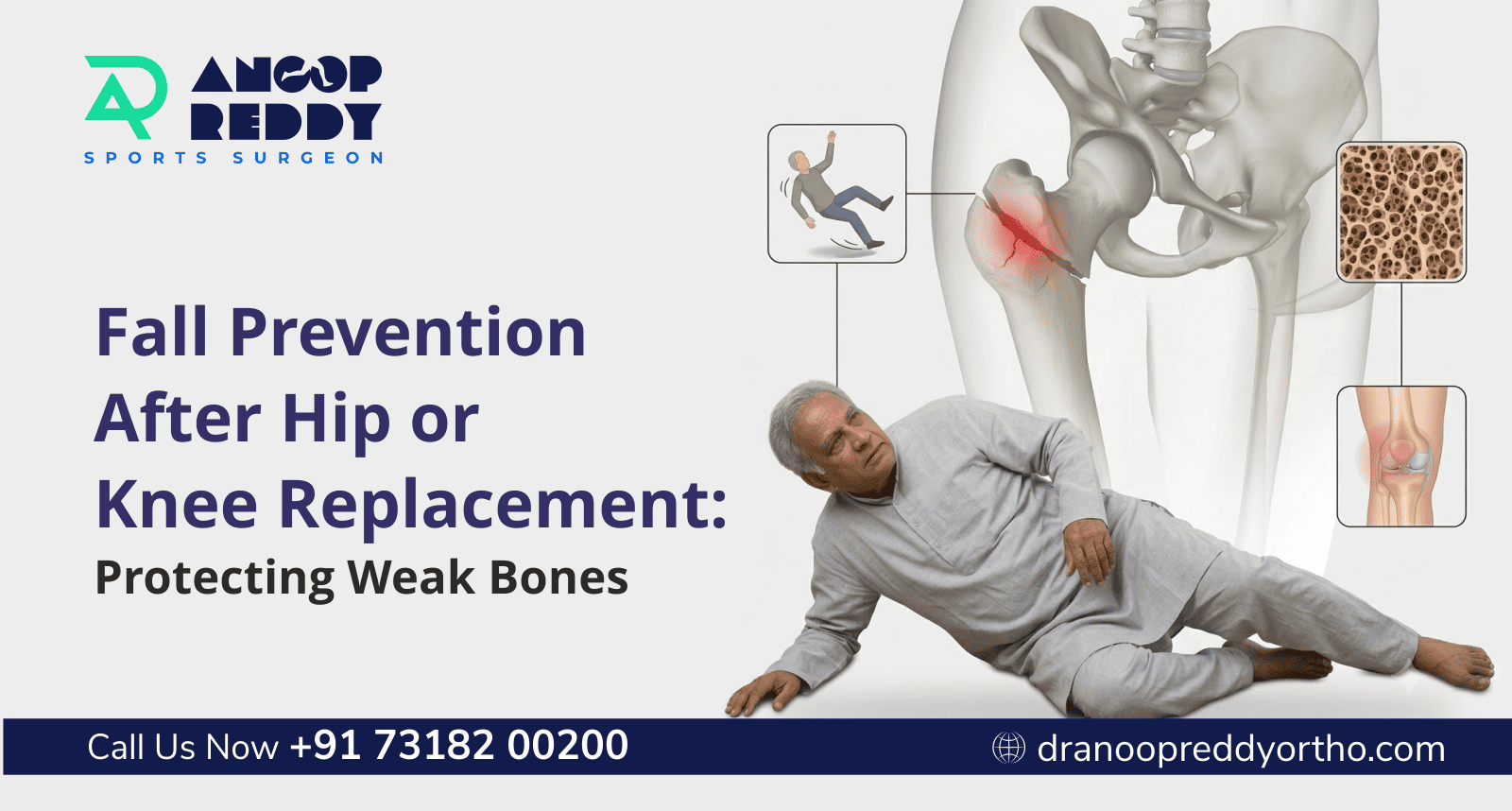
After a hip or knee replacement, the bone around the new implant, and the rest of the skeleton, is often weaker than it looks on an X-ray, which makes fall prevention one of the single most important things a patient can do to protect their surgical result. Research shows that a simple fall from standing height causes the overwhelming majority of fractures around joint implants, known as periprosthetic fractures, making this far more preventable than most patients realize.
This article explains why fall prevention matters so much after joint replacement, what the research shows about periprosthetic fracture risk, and practical steps to protect your bones during recovery and beyond. For related reading, see our articles on robotic joint replacement and precision orthopaedic surgery and personalised orthopaedic care, rehab, and preventive injury screening.
Key Takeaways
• Falls from standing height cause about 90 to 94% of periprosthetic fractures, the fractures that occur around a hip or knee implant, according to orthopaedic research.
• Periprosthetic fracture rates are rising nationally: one 2026 US analysis projected annual emergency department visits for these fractures could nearly double by 2035.
• A periprosthetic fracture is often an osteoporosis-defining event: one study found osteoporosis diagnosis rates jumped from 20% before the fracture to 39% after it, meaning many patients had undiagnosed weak bones all along.
• Nearly 30% of hip replacement patients report at least one fall within the first year after surgery, according to a 2026 study on post-surgical balance and physical function.
• Risk-stratified prevention programs, combining fall prevention strategies with early osteoporosis treatment, have been shown to reduce periprosthetic fracture rates in high risk patients, such as those over 80.
• Simple home safety changes, strength and balance training, and addressing bone health directly all meaningfully lower fracture risk after joint replacement.
Why Does Fall Prevention Matter So Much After Hip or Knee Replacement?
A hip or knee replacement restores a damaged joint, but it doesn’t restore normal bone strength throughout the rest of the skeleton, and the bone directly around the implant can actually be more vulnerable to fracture than a person’s other bones. When a fall happens, even a low energy fall from standing height, it can fracture the bone around the implant, a complication called a periprosthetic fracture. These fractures are a serious concern precisely because they are largely preventable: research has consistently found that the vast majority are caused not by high impact trauma, but by ordinary falls at home, which means fall prevention has a direct, measurable effect on protecting a joint replacement long term.
How Common Are Periprosthetic Fractures, and Why Are Rates Rising?
Periprosthetic fractures were once considered a relatively rare complication, but recent data suggests they are becoming more common as more people live longer with joint replacements.
• A 2026 US analysis of national emergency department data found 224,456 patients presented with periprosthetic hip and knee fractures between 2017 and 2022 alone.
• Based on current trends, researchers projected annual emergency department visits for these fractures could reach 43,000 to over 53,000 for hip fractures and 41,000 to over 108,000 for knee fractures by 2035.
• A ten-year nationwide study in France identified over 15,000 periprosthetic fractures, with a mean patient age of 81 and 70% of cases occurring in women.
• These trends reflect both the growing number of joint replacements performed worldwide and an aging population increasingly vulnerable to falls and bone fragility.
Full details on rising periprosthetic fracture trends are available from the national epidemiologic analysis published in 2026 and the French nationwide study on periprosthetic fracture trends.
Does a Periprosthetic Fracture Mean the Surgery Failed?
No, and this is an important point of reassurance. A periprosthetic fracture is not typically a sign that the original surgery was done poorly. It is far more often the result of a fall combined with underlying bone fragility that existed before or developed after the surgery. This is precisely why fall prevention and bone health, rather than the surgical technique itself, are the primary focus of reducing this risk.
What Does the Research Show About Falls and Fractures After Joint Replacement?
Understanding exactly how these fractures happen makes it clear why fall prevention deserves so much attention during recovery.
• One study of periprosthetic femur fractures after hip replacement found that a fall from standing height caused 94% of fractures, meeting the clinical definition of a fragility fracture, or osteoporosis-defining event.
• In that same study, the prevalence of a formal osteoporosis diagnosis rose from just 20% before the periprosthetic fracture occurred to 39% afterward, meaning a large proportion of patients had undiagnosed weak bones before the fracture happened.
• A separate 2026 study following hip replacement patients found that 29.5% experienced at least one fall within the first year after surgery, with lower postoperative balance confidence linked to a higher number of falls.
• Reviews of knee replacement fractures similarly report that over 90% of periprosthetic fractures result from low energy trauma, such as a fall from standing height, rather than high impact injury.
Can Improving Balance After Surgery Actually Reduce Fracture Risk?
Yes. Research specifically found a significant negative correlation between balance confidence and the number of falls a patient experienced after hip replacement, meaning patients with better balance confidence fell less often. This supports a very practical conclusion: structured balance training and confidence-building rehabilitation are not just about comfort or mobility, they appear to directly reduce the risk of the falls that lead to periprosthetic fractures.
What Fall Prevention Strategies Actually Reduce Periprosthetic Fracture Risk?
A 2026 study of very elderly hip replacement patients tested a risk-stratified prevention approach, combining several strategies rather than relying on any single intervention.
• Gender-specific fall prevention measures, tailored to the higher fracture risk seen in women, were part of the intervention package studied.
• Early anti-osteoporosis therapy, including bone strengthening medication and calcium supplementation, was combined with fall prevention rather than used alone.
• Enhanced monitoring for prosthesis stability and surgical planning choices, such as prosthesis type, were also identified as modifiable factors affecting fracture risk.
• The combination of these risk-stratified interventions was associated with a lower incidence of periprosthetic fractures compared with conventional care in the study’s very elderly patient group.
How Can You Protect Your Bones and Prevent Falls After Joint Replacement?
What to avoid: Don’t assume that once your joint replacement has healed, your fracture risk has passed. Bone fragility and fall risk often persist well beyond the initial recovery period, particularly in older adults. Don’t skip balance and strength training once you’re walking comfortably again, since confidence in daily activity does not always reflect actual fall risk.
• Remove loose rugs, trailing cables, and clutter from walkways at home, and ensure hallways and staircases are well lit, especially at night.
• Install grab bars in the bathroom and use a raised toilet seat or shower chair if recommended by your surgeon or physiotherapist during early recovery.
• Continue structured physiotherapy focused on strength and balance well beyond the initial recovery period, since ongoing training is linked to better balance confidence and fewer falls.
• Ask your doctor about a bone density test if you haven’t already had one, particularly if you are a woman over 65 or have other osteoporosis risk factors, since undiagnosed weak bones significantly raise fracture risk after a fall.
• Review your medications with your doctor for anything that may cause dizziness or unsteadiness, and have your vision checked regularly, since both are common contributors to falls.
• Use a walking aid as recommended during early recovery, even if you feel steady, since confidence does not always match actual balance capability in the weeks after surgery.
When Should You See a Doctor After a Fall or Suspected Fracture?
Certain symptoms after a fall, especially in someone with a hip or knee replacement, need prompt medical evaluation rather than a wait and see approach.
• New or worsening pain around the joint replacement after a fall, even without an obvious deformity
• Inability to bear weight on the affected leg
• Visible swelling, bruising, or deformity around the joint
• A sensation of the joint feeling unstable, “giving way,” or making unusual sounds since the fall
Consult Dr. Anoop Reddy Sama’s clinic if you or a loved one:
• Has had a fall since undergoing hip or knee replacement surgery
• Has noticed new pain, swelling, or instability around a joint replacement
• Wants a personalized fall prevention and bone health plan during recovery
• Has not yet had a bone density test despite risk factors for osteoporosis
Call +91 73182 00200 or book an appointment online to schedule a consultation.
If you suspect a fracture, marked by severe pain, inability to move or bear weight on the leg, or visible deformity, seek emergency care immediately rather than waiting for a scheduled appointment.
Medically Reviewed & Approved By
Dr. Anoop Reddy Sama
MBBS, DNB Ortho, MCh Ortho (UK), Fellowship-Trained Orthopaedic & Sports Surgeon, Renova Century Hospitals, Banjara Hills, Hyderabad
Dr. Anoop Reddy Sama specializes in advanced shoulder and knee conditions, robotic joint replacement, and sports injury care, with a strong focus on structured rehabilitation and long-term joint health monitoring. This article has been medically reviewed for accuracy as of September 2026 and reflects the most current research available on periprosthetic fracture prevention at the time of publication.
Medical References
Frequently Asked Questions
1. What is a periprosthetic fracture and how common is it after joint replacement?
A periprosthetic fracture is a break in the bone around a hip or knee implant. Rates are rising, with one 2026 US analysis identifying over 224,000 emergency department visits for these fractures between 2017 and 2022.
2. What usually causes a periprosthetic fracture?
The vast majority, about 90 to 94% according to orthopaedic research, are caused by a simple fall from standing height rather than high impact trauma.
3. Does a periprosthetic fracture mean my surgery was done incorrectly?
No. It’s far more often the result of a fall combined with underlying bone fragility, not a sign of surgical failure, which is why fall prevention and bone health are the main focus for reducing this risk.
4. How many people fall after hip or knee replacement surgery?
One 2026 study found that 29.5% of hip replacement patients experienced at least one fall within the first year after surgery.
5. Is osteoporosis linked to periprosthetic fractures?
Yes. One study found osteoporosis diagnosis rates rose from 20% before a periprosthetic fracture to 39% after it, suggesting many patients had undiagnosed weak bones before the fracture occurred.
6. Can balance training actually reduce fracture risk after joint replacement?
Yes. Research found a significant link between lower balance confidence and a higher number of falls after hip replacement, supporting structured balance and strength training as a fracture prevention strategy.
7. What home changes help prevent falls after joint replacement?
Removing loose rugs and clutter, improving lighting, installing bathroom grab bars, and using recommended walking aids during early recovery are all effective, practical fall prevention steps.
8. Should I get a bone density test after a hip or knee replacement?
Yes, particularly if you are a woman over 65 or have other osteoporosis risk factors, since undiagnosed weak bones significantly increase the risk of a periprosthetic fracture after a fall.
9. How long after surgery should I continue fall prevention efforts?
Fall prevention and balance training should continue well beyond the initial recovery period, since bone fragility and fall risk often persist long after a patient feels steady and confident again.
10. What should I do if I fall after a joint replacement?
Seek medical evaluation if you have new pain, swelling, instability, or inability to bear weight on the joint after a fall, even without an obvious deformity, and seek emergency care immediately if a fracture is suspected.